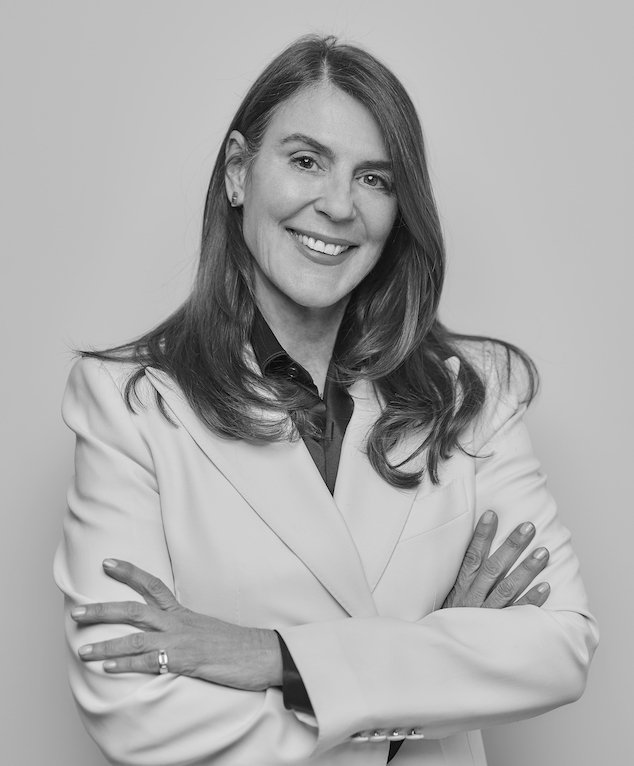
Herminia Ibarra
Author of Act Like a Leader, Expert in Leadership Transformation, Fellow of the British Academy, Professor of Organisational Behaviour at London Business School
why book herminia?
-
Herminia Ibarra is a top-ranked leadership expert by Thinkers50 and a Fellow of the British Academy
- She is the author of best-selling books Act Like a Leader, Think Like a Leader and Working Identity
- Herminia speaks worldwide on inclusive leadership, career reinvention, and transforming organisational culture

Biography
Herminia Ibarra is the Charles Handy Professor of Organisational Behaviour at London Business School.
Before joining LBS, she taught at INSEAD and Harvard Business School.
A global expert in leadership and career development, she ranks among the top management thinkers by Thinkers50.
She is a Fellow of the British Academy and a member of the World Economic Forum Expert Network.
Herminia also judges the Financial Times Business Book of the Year Award and won the Academy of Management’s Scholar-Practitioner Award in 2018.
Her research bridges academic insight and leadership practice.
She has held major governance roles, including on the boards of INSEAD, London Business School, and Harvard Business School, where she chaired the Visiting Committee.
Originally from Cuba, she earned her MA and PhD from Yale University, where she was a National Science Fellow.
Herminia is the author of two bestselling books, Act Like a Leader, Think Like a Leader and Working Identity.
She regularly writes for Harvard Business Review, Financial Times, Wall Street Journal, and The New York Times. Her article The Leader as Coach won the 2019 Warren Bennis Prize.
As a global speaker, Herminia advises organisations on how to lead transformation, develop diverse talent, and build authentic leadership pipelines.
Topics
How to Get a More Diverse Pool of Talent into Senior Leadership
Career success is a tripod built on three legs: key experiences that help people learn critical business, functional and organisational skills; a network of helping relationships that provide information, advice and support; and growing in confidence, credibility and reputation.
These are precisely the same three arenas in which gender and racial bias play out in organisations: access to mission-critical roles, access to a network of senior gatekeepers and biased perceptions about the capacity and potential of people who are underrepresented at senior levels. In this session, Herminia explains how the three legs of the tripod work together to create virtuous or vicious career cycles, and how organisations can improve progression rates by tackling all three in unison.
Developing Authentic Sponsorship Relationships
Getting the mission-critical roles and stepping stone assignments that pave the way to a successful career requires more than skills and drive. It requires a special kind of relationship — called ‘sponsorship’ — in which mentors goes beyond giving feedback and advice to use their influence with other senior executives to advocate for proteges and ensure that they have exposure and visibility with other top decision makers.
In this session, you will learn what sponsorship is, why it matters, and most importantly, how to cultivate mutually beneficial relationships such that, over time, your relationships are more likely to blossom into true sponsorship. Herminia and the participants will discuss the spectrum of helping relationships, ingredients of effective career conversations, how to manage universal ‘like me’ biases and how to overcome common challenges in sponsoring relationships across differences.
Making Successful Career Transitions
Today, people at all stages of their careers are asking themselves profound questions about the kind of work they do, how much of it they want to do, and the place it occupies in their lives. In part, we’re asking ourselves these questions because fewer and fewer of us conceive of life as having the three ‘traditional’ stages: a short early stage devoted to learning, a long middle stage devoted to work, and a final retirement stage.
Instead, with growing frequency, we’re alternating between changing jobs and careers, pursuing opportunities for education, and making time for periods of rest and restoration. There’s a lot that’s beneficial and necessary about this shift, but no matter how often you change careers, you’re likely to experience the transition as an emotionally fraught process — one that involves loss, insecurity, and struggle.
In this session, I explain what makes career change hard, outline a three-part process of exploring a diversity of ‘possible selves’ and describe the three levers for change that we all have at our disposal: experimenting with new professional activities, connecting to new networks and working and re-working the story of who we are.
How to Step up to Bigger Leadership Roles
Today’s breakneck pace of technological change has an immense impact on leaders, and as a result, on their organisations’ capacity to transform. All too often, executives remain stuck in outdated mindsets and modes of operating, even when they recognise the need to reinvent themselves in order to step up in their careers. This interactive session upends traditional, introspective advice and says act first — in order to change your way of thinking. Whether you are moving into a new role or stepping up in your current post, in this session you will learn to change through action, not reflection, and to apply a growth mindset to our own leadership capacities.
Learning objectives:
- Identify how to redefine your job so that your contributions are more strategic and client-centred.
- Learn how to expand your network so that you connect to and learn from a bigger range of stakeholders inside and outside your firm.
- Understand different ways of defining authenticity in order to give yourself permission to stretch beyond your ‘natural’ leadership styles and habitual ways of contributing.
Leadership Skills for Organisational Transformation
Today more than ever we need leaders who can help transform our firms — so they become more agile, more innovative, more digitally savvy, more customer-centric, more inclusive and/or more human. Herminia has found that five leadership skills are vital for moving our organizations in this desired direction, increasing their people’s capacity to deal with today’s adaptive challenges: situations in which problems are complex, there isn’t an obvious answer, and, the brainpower and enthusiasm of many, not just the top leaders, is needed to solve them.
The Five Skills:
- Cross-cutting: developing networks of relationships that extend and connect to a diversity of people and groups.
- Collaborating: fostering candor and psychological safety to increase team performance.
- Coaching: asking questions to develop others’ potential.
- Culture-shaping: proactively shaping organizational culture and mindsets, including recognizing and modifying practices that are no longer fit for purpose.
- Connecting: growing in empathy and authentic leadership.
Herminia Ibarra
Resources
Books



Related Speakers



Author of Act Like a Leader, Expert in Leadership Transformation, Fellow of the British Academy, Professor of Organisational Behaviour at London Business School
Related Speakers
- Leadership Speakers
- AI & Digital Transformation Speakers
- Diversity & Inclusion Speakers
- Employee Engagement Speakers
- Future of Work Speakers
- HR & Corporate Culture Speakers
- Technology & Data Speakers